
A tidy network cabinet will not make your WiFi faster. Not by one megabit, not by one bar of signal, not by anything you could measure on a speed test.
If you have ever seen one of those photographs — patch leads combed into perfect parallel lines, every colour grouped, not a cable tie out of place — and quietly assumed it meant the network behind it was excellent, this post is the gentle correction. That photograph tells you almost nothing about the network. It tells you about the cabinet.
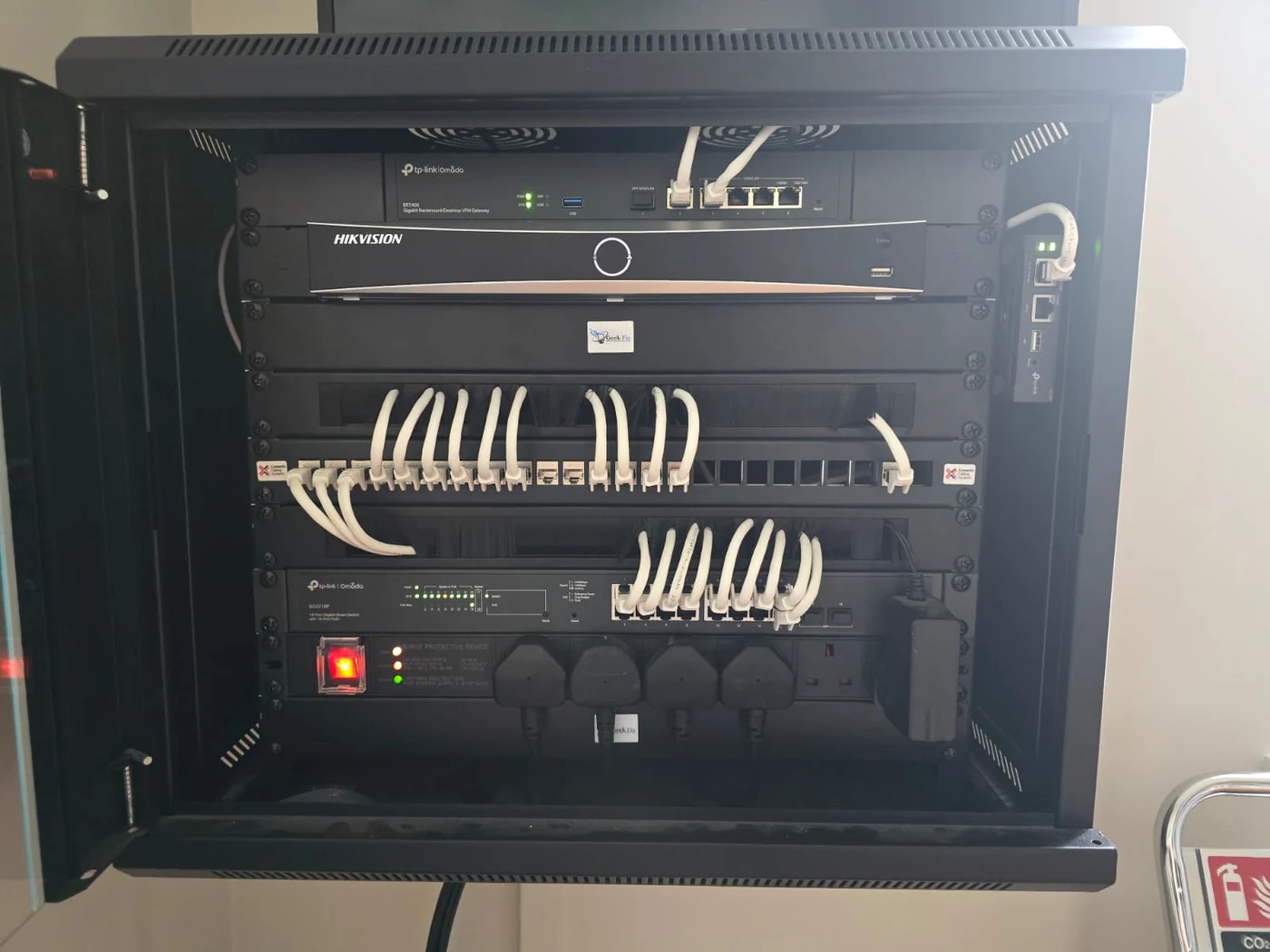
So why do we spend real time on it? Because of what happens at eight o'clock on a Tuesday morning, eighteen months after everybody has forgotten the install ever happened.
What you are actually buying is a future hour you do not have to pay for
Here is the scenario the tidiness is for, and it is the only honest argument for it.
Something stops working. A card machine drops off. One office goes quiet. A camera in the corner of the yard stops recording and nobody is sure how long it has been down. Somebody calls an engineer — me, or whoever comes after me, possibly years from now and with no memory of the building whatsoever.
That engineer's first job is not fixing anything. It is answering a question: which cable is the broken one?
In a cabinet that was installed properly, that question takes about ninety seconds. The cable runs are terminated into a patch panel, each port is numbered, the numbers match a sheet of paper that says which room each one serves, and the short leads from panel to switch are labelled at both ends. The engineer reads the problem off the hardware and gets on with the actual repair.
In a cabinet where thirty-odd unlabelled cables were pushed in and connected until everything worked, that question takes hours. Not because anyone was lazy — because the only way to answer it is to trace cables one at a time, often with half the office unplugged while you do it.
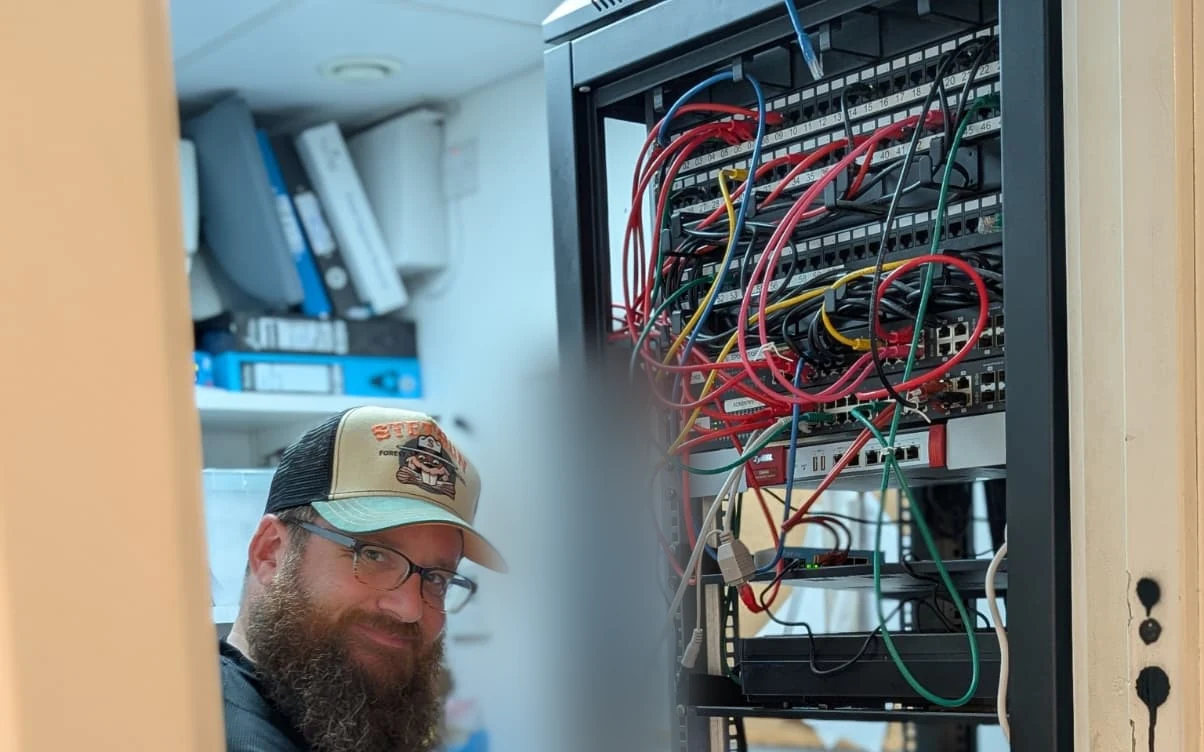
Those hours are chargeable. They are chargeable whoever does them, at whatever that person charges, for as long as the building stands. That is the whole argument. The time spent making it legible on installation day is time the building's owner does not spend again, repeatedly, every time something goes wrong for the next decade.
That is it. That is the entire case for a tidy cabinet. Notice what is not in it: nothing about speed, nothing about signal, nothing about reliability. It is a maintenance argument, and it only pays out in the future.
The four things that actually save the time
Worth being specific, because "tidy" is a vague word and only some of it does any work. If you are deciding what to ask for, these are the parts that earn their keep — and none of them is really about appearance.
1. Labels at both ends of every cable. This is the single highest-value thing in the whole cabinet and the cheapest to do at the time. A cable labelled at one end only is half a label: you know what it is when you are at the cabinet, and you are back to guessing when you are at the wall socket. Both ends, matching, written at the moment the cable is run — not from memory afterwards.
2. A patch panel, rather than cables straight into the switch. A quick translation, because this is the bit non-technical clients most often nod along to without being told what it means. The permanent cable runs are the ones buried in walls, ceilings and floors — the ones you really do not want to disturb. A patch panel is a strip of sockets, usually numbered, that those permanent runs are terminated into once and then left alone forever. Patch leads are the short, cheap, visible cables that run from the panel to the switch (the box that joins everything together).
The point is the division of labour. All the handling, unplugging, moving and swapping happens on the short leads, which cost very little and take seconds to replace. The fragile permanent run in the wall gets connected once and is never touched again. Without a panel, every change means disturbing the cable in the wall — and a damaged permanent run is a genuinely annoying repair, usually involving a ladder and a loft.
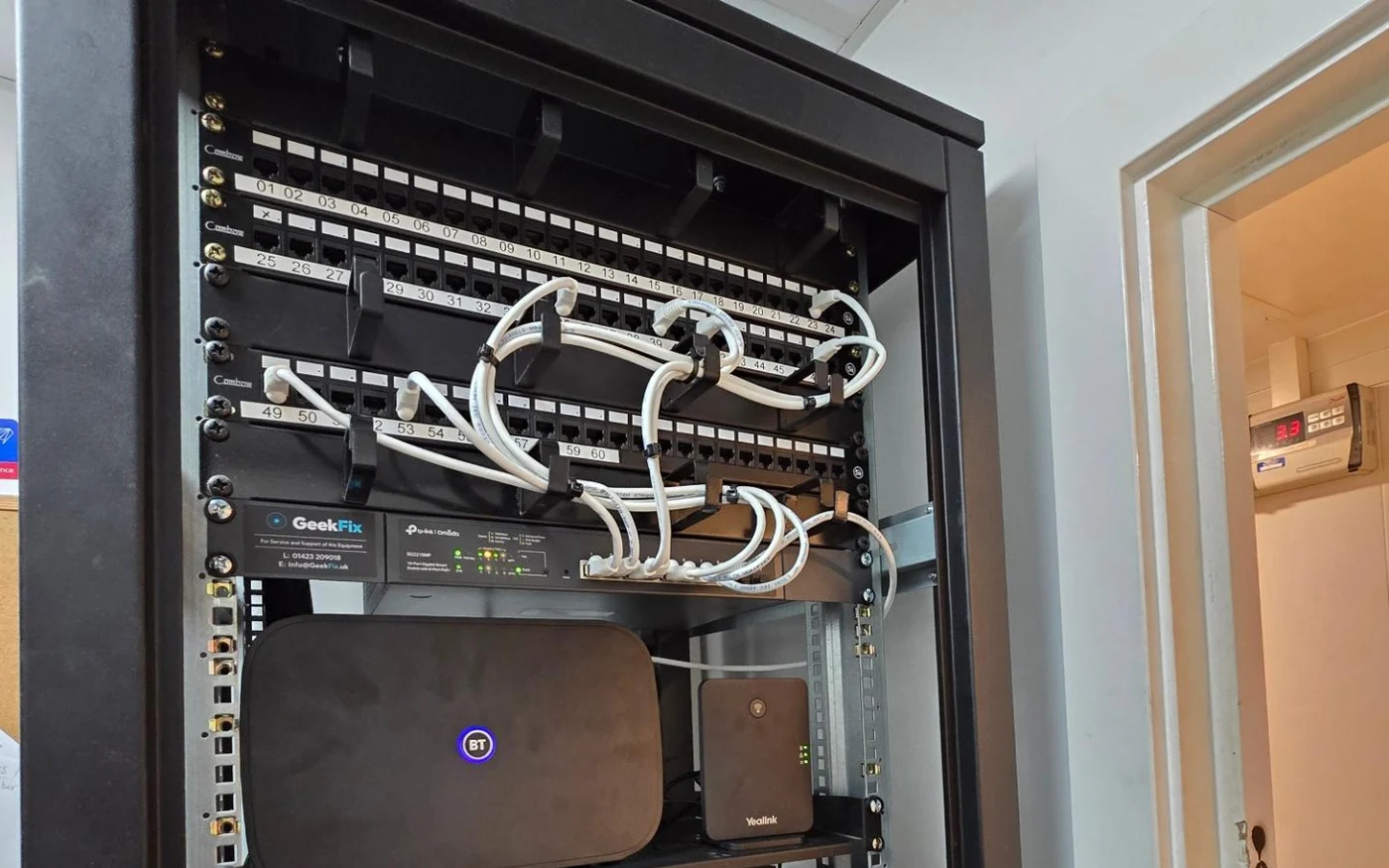
3. Documentation that leaves with the customer. A port map, or cable schedule: cabinet port 7 goes to the back office north wall, port 8 goes to the till. On paper, in an email, in a folder — the format matters far less than its existence. The test is simple: if the engineer who installed it were permanently unavailable, could somebody else work out what they were looking at? If the answer lives only in one person's head, the building has an undocumented network, however good it looks.
4. A bit of slack left behind. A service loop is just a small amount of spare cable coiled up where it will not be in the way. It exists so that a cable can be re-terminated after an accident, or a socket moved a few feet, without re-running the whole thing. It costs a metre or two of cable on the day and saves a complete re-run later.
Three of those four are, in the end, forms of writing things down. That is the unglamorous truth of it.
You cannot judge a network from a photograph
This is the part I would most like people to take away, because it cuts in both directions and it protects you as a buyer.
A beautiful cabinet can sit on top of a badly designed network. Immaculate cable management, lovely colour coding — and underneath it, a layout that was never thought through, kit that cannot do what the building needs, or a single point of failure nobody noticed. The combing of the patch leads has no opinion about any of that.
And a plain cabinet can be completely faultless. Honest, functional, nothing photogenic about it, working perfectly for years and perfectly maintainable because everything in it is labelled and written down. Nobody is going to put it in a brochure. It does not matter.
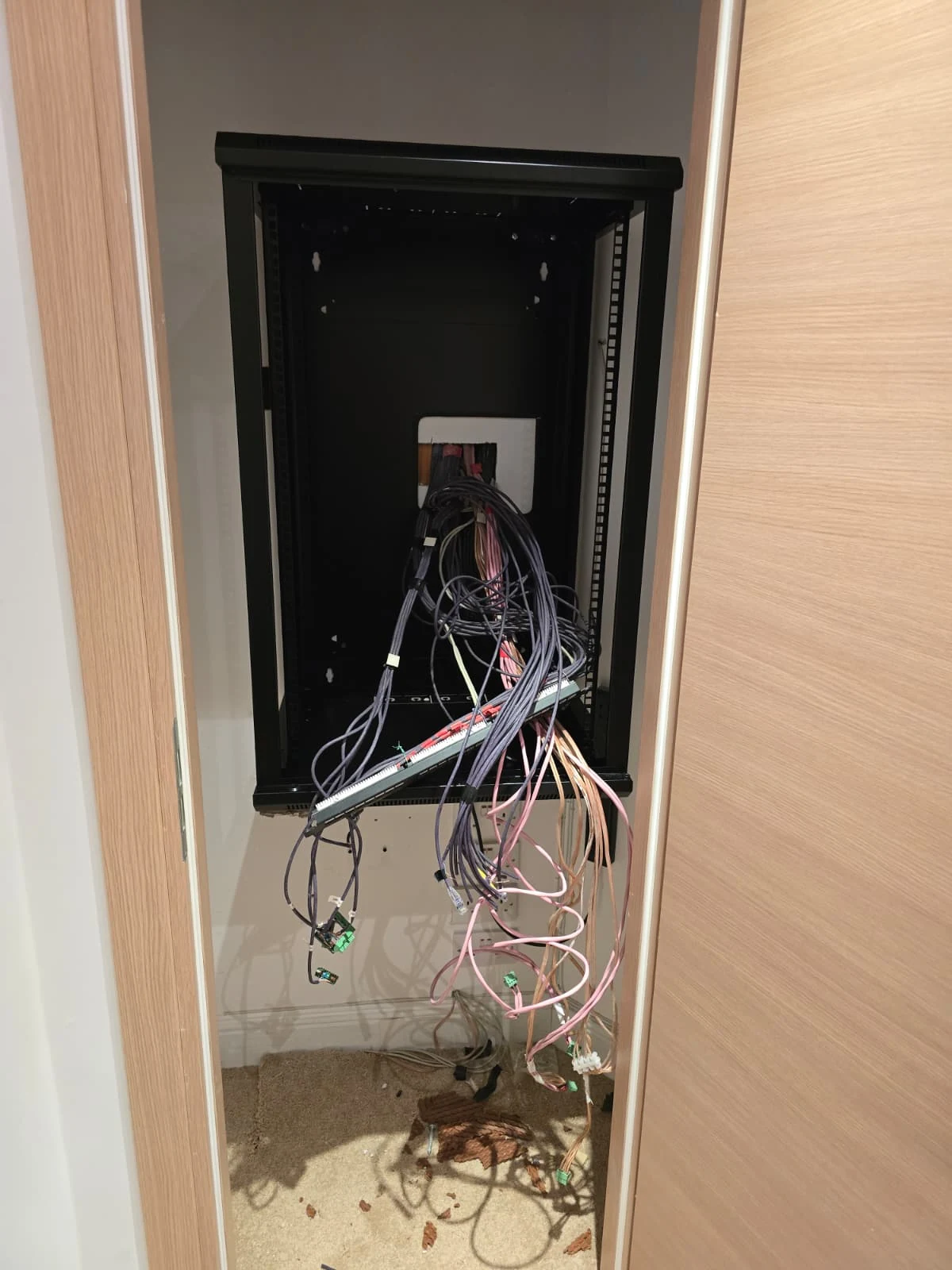
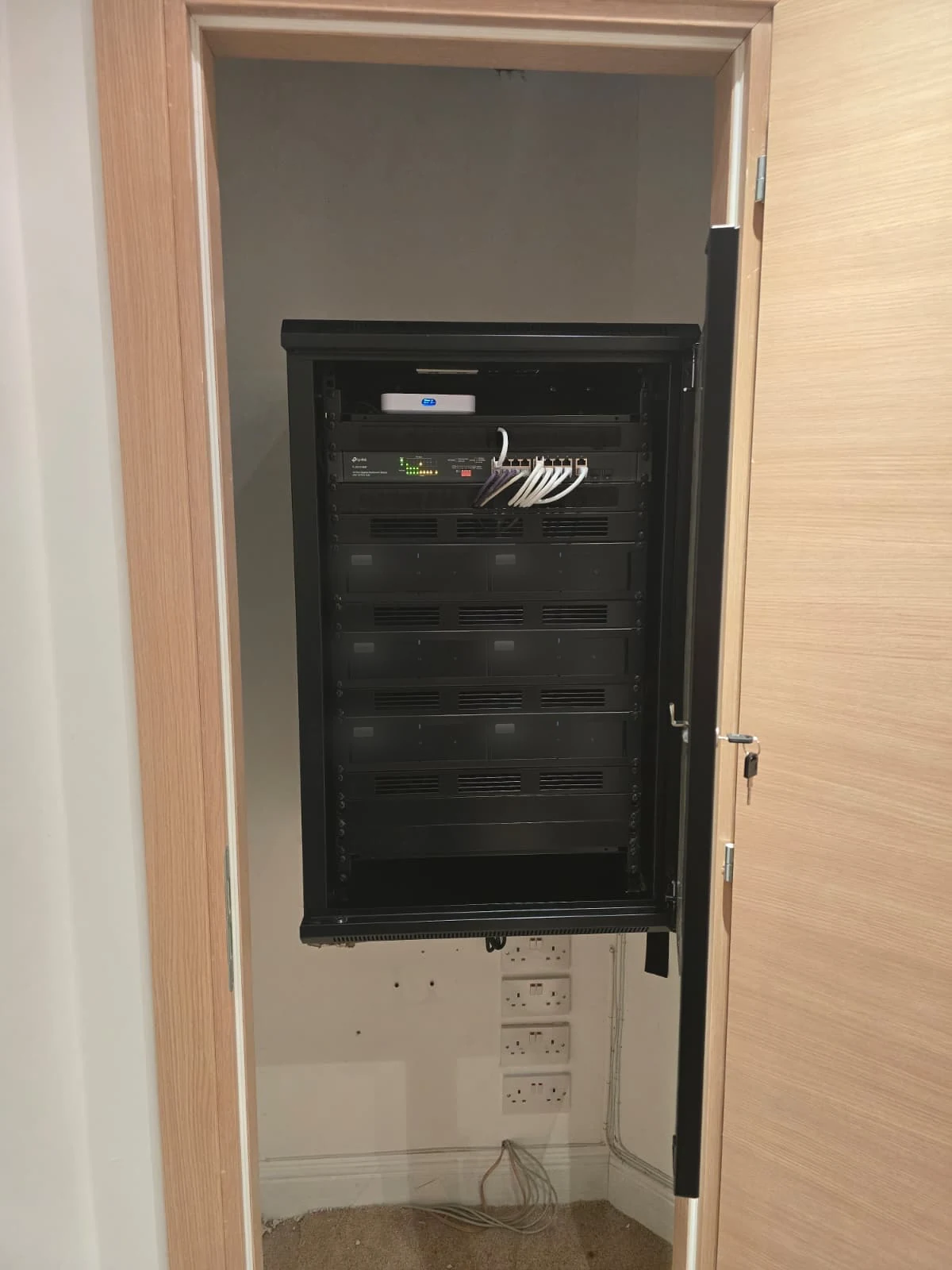
Think about what a photograph genuinely cannot show you:
- Whether anything is labelled at the far end
- Whether a port map exists at all
- Whether the network's design suits how the building is actually used
- Whether there is a cable kinked into a tight bend behind the bundle, hidden by the very neatness you are admiring
- Whether the person who built it is the only person alive who understands it
So when a tidy cabinet and a good network do turn up together — which they often do — it is worth being clear about the direction of the relationship. The tidiness did not cause the quality. Tidy is the by-product of someone doing the job carefully, not the point of doing it. It is a reasonable clue about habits of mind. It is not evidence, and it is certainly not a specification.
Where neatness and performance genuinely do touch — and why that is still not the argument
In the interest of not overstating my own case: there are a few places where physical handling has real electrical consequences, and they happen to look like tidiness.
A network cable has a bend radius — a limit to how tightly it can be curved before the twisted pairs inside start to deform. Kink one hard round a sharp corner and you can degrade it. Over-tighten a cable tie and you can crush the pairs inside the jacket, which is why many installers use soft hook-and-loop straps instead. Stack equipment with no gap and block its airflow, and you can shorten its life. Run mains power and data tightly parallel for a long distance and there are good reasons to separate them.
All of those are genuine. But none of them is the appearance. They are practices, and the neat look is a side effect of following them. Crucially, you cannot verify a single one from the outside — a cabinet can look superb with a crushed cable tucked behind the bundle, and a plain one can have every bend respected. So even here, the photo tells you nothing. It just means the argument is "do the physical work properly", which is not quite the same as "make it look nice", even though the two usually arrive together.
The honest other half: sometimes you just want it working today
Now the part that most articles like this leave out.
Not everybody wants the full treatment, and that is a perfectly legitimate decision. Some clients want it working today, want it working properly today, and are entirely uninterested in a labelling schedule. I do that job too, without a word of complaint, and the network I leave behind works exactly as well on the day as the comprehensive version would.
There are good reasons to choose it:
- You are in a short lease and will not be in the building long enough to see the payback
- It is a temporary space — a pop-up, a site office, a unit you are already planning to leave
- The shop cannot be shut for a day, and the realistic choice is a quick job now or no job at all
- The budget exists this month and will not exist next month, which is a real constraint and not a failure of planning
- The installation is small enough that tracing five cables is genuinely not much of a task
What I will not do is pretend it is the same decision made cheaply. It is a trade, not a saving. You are not avoiding the cost of making the network legible; you are deferring it, and you will pay it in diagnostic time, spread out, at unpredictable moments, probably when something is already broken and you are already having a bad day. Sometimes that is still the right call — deferred costs are genuinely cheaper than immediate ones if you are short now, and a cost you may never incur because you have left the building is no cost at all.
So there is no judgement in it from my side. There is only one thing I insist on, which is that you know which of the two you are buying. The failure mode I actually care about is somebody paying for the quick version while believing they bought the thorough one, and finding out two years later in the worst possible circumstances.
If you only do one thing
Ask for the labels and the port map.
They are the cheapest part of the whole business, they take the least time on the day, and they capture most of the future benefit. A functional, unglamorous cabinet with every cable labelled at both ends and a one-page sheet saying what goes where is worth considerably more to you in three years than a photogenic one with nothing written down. If the budget only stretches to one improvement, that is the one.
The rest — the panel, the loops, the cable management — is a judgement call that depends on how long you are staying, how much is in the cabinet, and how badly a half-day outage would hurt. Those are questions about your building and your business, not about cabling, and they are worth a conversation rather than a default.
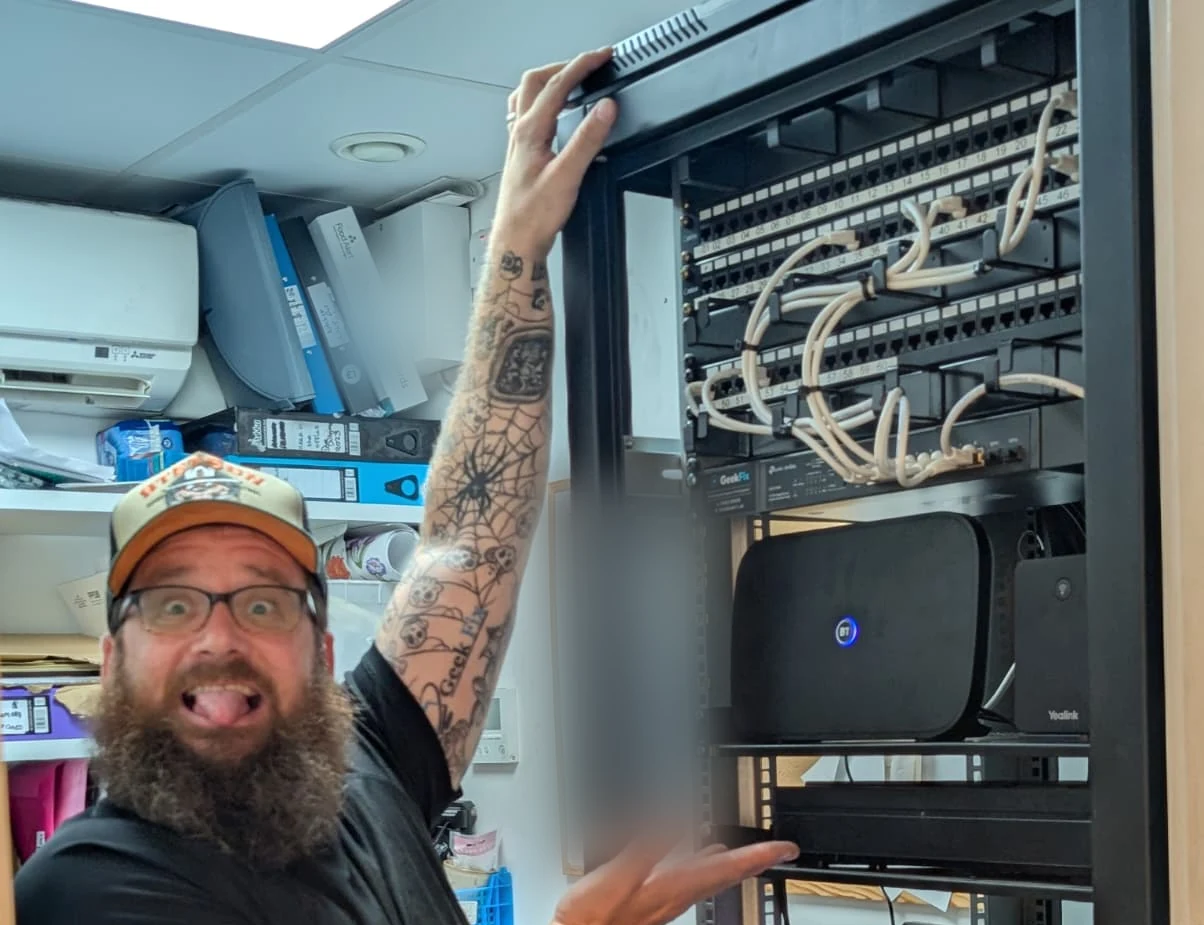
Where we come in
Most of our business network and structured cabling work ends in a cabinet, so this is a decision we talk through on more or less every commercial job. For homes, the same thinking applies at a smaller scale in our home WiFi work — usually a handful of runs, a small enclosure, and the same two minutes with a label printer that saves somebody an appointment later.
And if you are reading this because you have inherited a cabinet nobody understands and something in it has stopped working, that is firmly network troubleshooting, and it is a very ordinary request. We are not going to make you feel bad about how it was left. For what it is worth, the state of the cabinet is rarely a comment on whoever installed it — most of these were put in under time pressure, by people doing what they were asked to do, for a budget that is no longer anybody's fault.
If any of this is live for you, a free phone call is the quickest way through it. Tell us what is in the cabinet, how long you expect to be in the building, and what has gone wrong if anything has. We can usually tell you on the phone whether you are looking at a labelling exercise, a re-termination, or simply nothing at all. If it needs someone on site, we will tell you what that involves and what it costs before anything is booked.
A tidy cabinet is not vanity, and it is not speed. It is a letter to whoever opens it next — quite possibly you, in a cupboard, with a torch.